

Understanding the Basics to Choose the Right Sprinkler System
Selecting the most suitable sprinkler for your operation starts with understanding a few key technical principles. These insights not only help you compare available options but also ensure your system delivers efficient and uniform irrigation tailored to your crop and field conditions.
One critical concept is uniformity, the even distribution of water across your field. High uniformity in sprinkler irrigation helps ensure all plants receive the right amount of water and nutrients, leading to consistent growth, optimized yields, and improved crop quality. In contrast, poor uniformity can result in overwatering in some areas and underwatering in others, negatively affecting your productivity.
In the next sections we’ll guide you through the essential elements to consider when choosing a sprinkler system, helping you make a confident and informed decision.
Understanding Distribution Uniformity
One of the most important aspects of sprinkler irrigation is distribution uniformity, which describes how consistently water is applied across the irrigated area. A good starting point for evaluating uniformity is understanding the irrigation or wetted profile. This refers to the shape and coverage area created by a single sprinkler.
The shape of this profile can vary depending on the sprinkler type and nozzle design. The most common patterns are step, bell, and triangular.
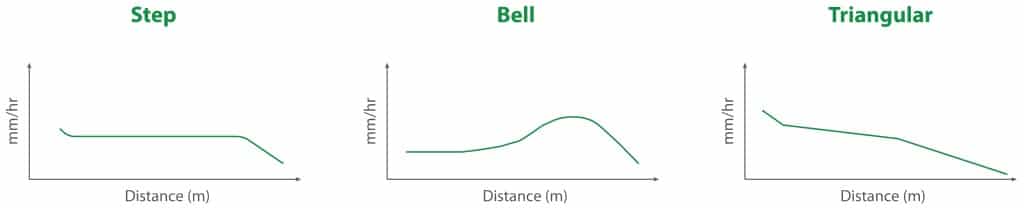
While different sprinklers may have similar flow rates, their overlap characteristics play a key role in achieving high uniformity. That’s why understanding both the water pattern and how sprinklers are arranged in the field is essential.
Effective Overlapping
To ensure even water coverage, adjacent sprinklers need to overlap their wetted areas. This helps avoid dry spots and provides consistent irrigation across the field.
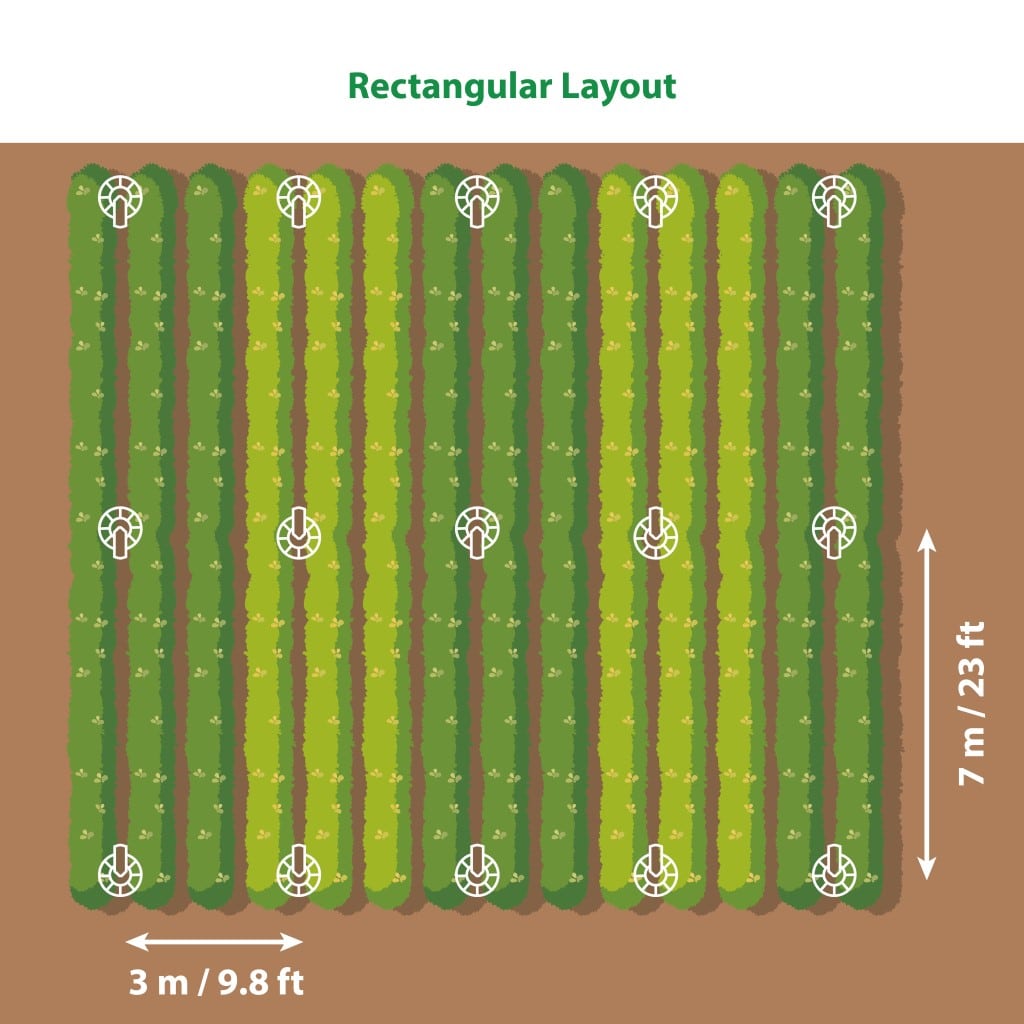
The wetted profile determines how far the water spreads, and the sprinkler layout defines how these patterns interact. The two most common layouts are triangular and rectangular.

Layout Type
Best Used For
Image
Triangular overlapping
Ideal for windy areas. Sprinklers form a triangle, helping distribute water more evenly in all directions.

Rectangular overlapping
Ideal for simpler setups. Sprinklers are arranged in straight lines, with equal spacing between rows and columns.

Measuring Distribution Uniformity
Once your sprinkler system is setup, it’s important to check how evenly it is watering your field. This is done
by measuring distribution uniformity using a few key indicators:
Indicator
What it Tells you
Christiansen’s Uniformity (CU)
Shows how evenly water is distributed overall. Closer to 100% means the best uniformity.
Distribution Uniformity (DU)
Focuses on the driest 25% of the field. A high DU means even water delivery, even to the driest spots.
Scheduling Coefficient (SC)
Helps you adjust watering times. A value close to 1 means your system is extremely efficient.
How Uniformity Looks in Practice
To better understand the previous metrics, look at the example below. This simple layout represents the amount of water collected at different points across a field.
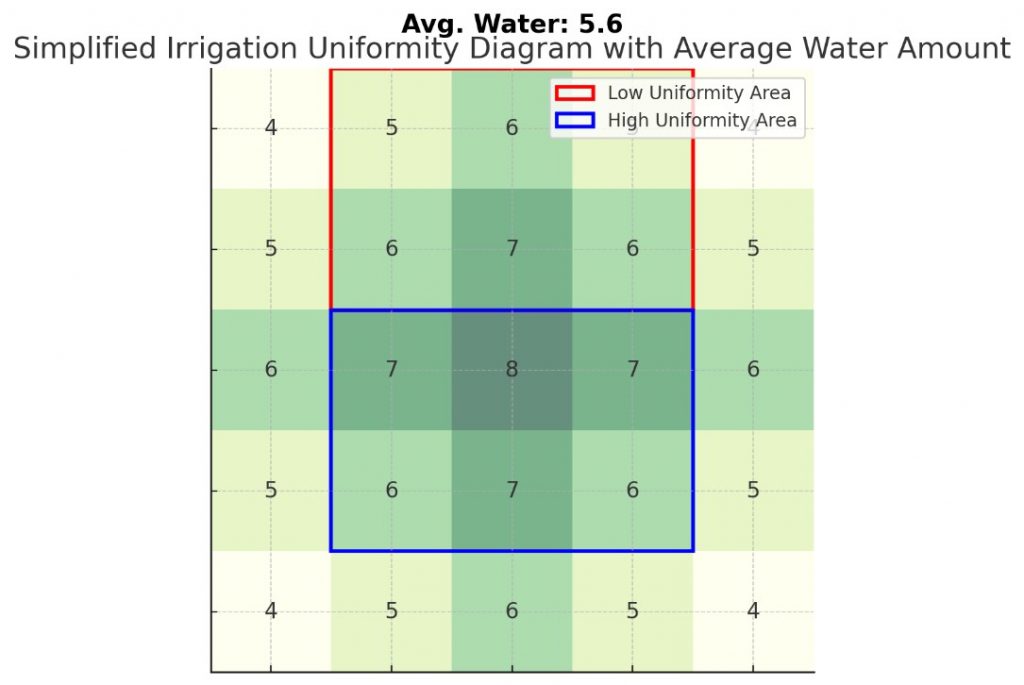
- Average water applied: 5.6
- Numbers like 4, 5, 6, 7 show actual readings at various locations·
- The red box highlights a zone with low uniformity (less consistent watering).
- The blue box shows a high uniformity area (more even distribution).
By analyzing these values, you can identify problem areas and make data-driven adjustments to improve efficiency, boost crop performance, and reduce waste.
Optimizing Uniformity
Getting the most out of your sprinkler system means finding the right balance between three key metrics: CU, DU, and SC. Together, they give you a complete picture of how well your irrigation system is performing.
With tools like the Rivulis Hydraulic Tool, you can measure these values and make informed adjustments to improve water distribution, efficiency, and crop results.
Each crop type has different recommended uniformity targets. But before we dive into those, here’s a quick recap of what these metrics mean:
CU
Measures how evenly water is spread across the field.
DU
Ensures even the driest zones receive enough water.
SC
Identifies areas where efficiency can be improved.
Recommended Uniformity Targets by Crop Type
Crop Type
CU %
DU %
SC (5%)
Open Field Crops (wheat, sunflower, corn)
82–85
80–82
1.3
Open Field Vegetables (potatoes, carrots)
88–92
82–85
1.2
Greenhouses
92–95
90–92
1.2
High-Tech Glasshouse
95+
94+
1.1
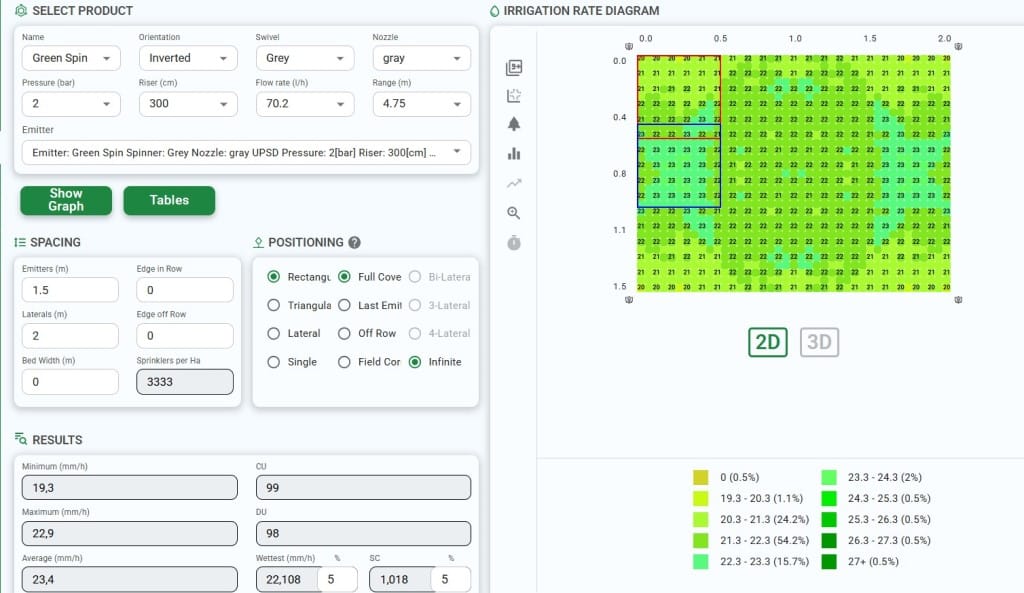
Rivulis Hydraulic Tool example of Green Spin Sprinkler with CU 99%, DU 98% and SC 1.0
To learn more about this key tool refer to the following section:
The Rivulis Hydraulic Tool

The Rivulis Hydraulic Tool is designed to help you create efficient irrigation system layouts using Rivulis sprinklers and components by also making it easier to calculate key metrics as CU, DU and SC, so you can adjust your setup for better performance.
You can explore the tool and find step-by-step instructions here: Rivulis Hydraulic Tool
Whether you’re designing for an open field or a high-tech greenhouse, this tool offers a practical way to evaluate your system and make confident, informed decisions that improve water distribution and crop results.
Using the Rivulis Hydraulic Tool:
Every Drop Counts (EDC) Feature
The Every Drop Counts (EDC) feature within the Rivulis Hydraulic Tool allows you to explore the full range of Rivulis sprinklers and run detailed uniformity calculations and simulations. This functionality is designed to help you make accurate irrigation decisions, based on real product data and field conditions.
The section is organized into three simple steps:
1) Product Selection
Begin by choosing the specifications that suit your needs, such as sprinkler type, flow rate, and operating pressure. The tool will recommend the most suitable Rivulis sprinkler and provide useful product details to guide your selection.
2) Spacing and Positioning
Next, enter the distance between sprinklers (e.g. 3 m / 9.8 ft) and between irrigation lines (e.g. 7 m / 23 ft).
3) Simulation and Analysis
Once your setup is defined, run a simulation to analyze distribution uniformity and coverage. This step helps you verify that your system will apply water consistently and efficiently, before it’s even installed.
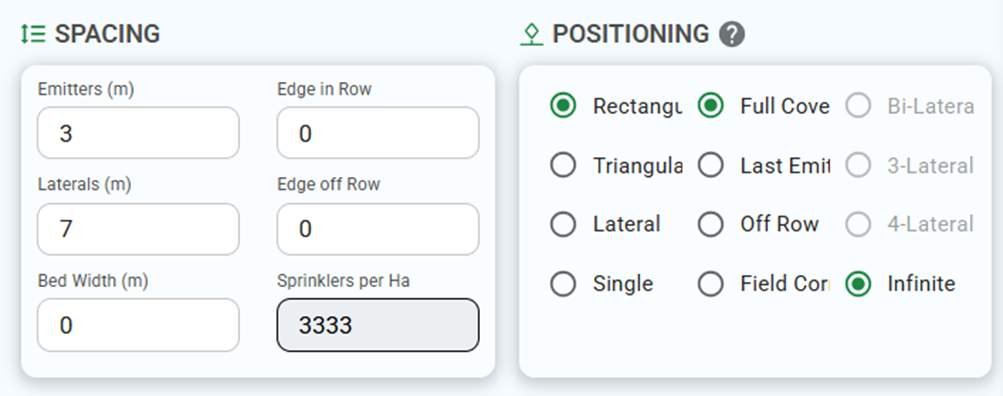
Results & Outputs
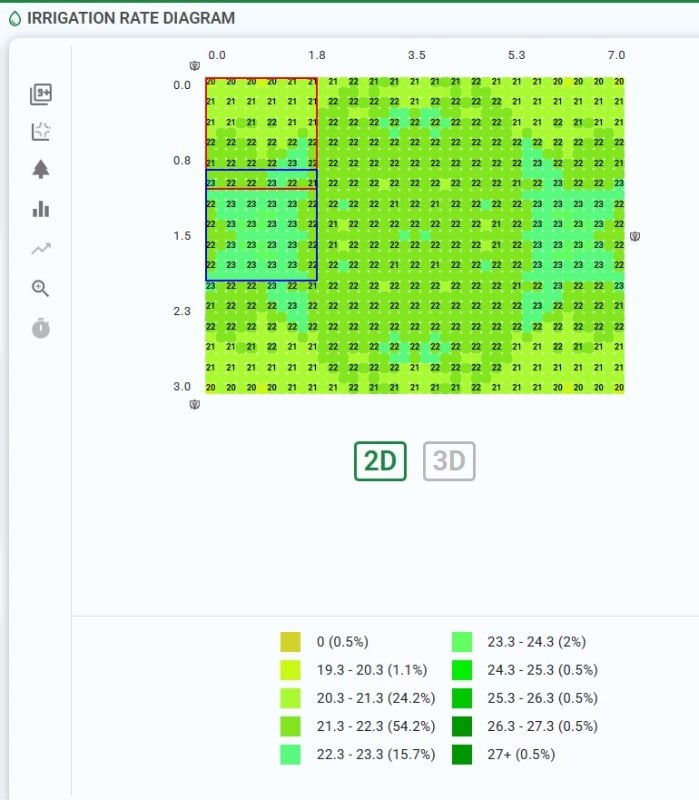
Once you’ve entered your inputs, the tool quickly calculates key metrics, including:
- Minimum, Maximum, and Average Pluviometry
These indicate how much water is applied across your field.
For open fields, average pluviometry should ideally be between 3–5 mm/h (0.12–0.20 in/h), with minimum and maximum values staying close to the average.
- CU, DU, and SC values
These should be compared with the target values in the table above to evaluate uniformity and efficiency.
Tip: The default “window size” for SC (Scheduling Coefficient) is 10%, but for better accuracy:
- Use 8% for open fields
- Use 5% for greenhouses
If your results aren’t ideal on the first try, adjust sprinkler spacing, line spacing, flow rates, pressure levels. Keep in mind, some parameters may be fixed – like seedbed width or available pressure – but adjusting the flexible ones can help you get closer to optimal performance.
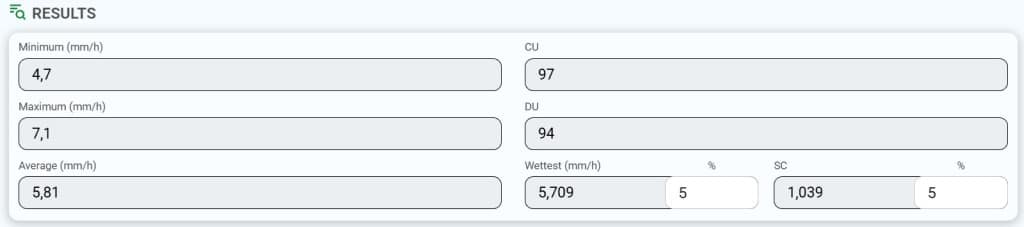
Irrigation Rate Diagram
Located on the right side of the screen, the Irrigation Rate Diagram shows how evenly water is distributed.
Use the color scale and numeric values to identify:
- Areas receiving too much water
- Drier zones that may need adjustment
- This visual helps confirm whether your layout is performing uniformly across the field.
Share Your Results
Once you’re satisfied with your design, you can print the report or share it via smartphone with farmers or agronomists. This makes it easy to explain decisions and demonstrate the performance advantages of Rivulis solutions compared to alternatives.
Important Note on Real-World Conditions
The simulations are based on lab conditions. In the field, external factors like wind, terrain variations, and infrastructure limitations can affect performance. Aim for optimal values in the tool; it’s the best way to get reliable results when it matters most: in your field.
Now that you’ve learned how to evaluate and optimize your irrigation design, the next step is choosing the right sprinkler.
Refer to the following section for detailed information on each Rivulis sprinkler, including flow rates, wetted diameters, recommended spacing, and ideal applications, everything you need to make the right selection for your field or greenhouse.
Discover Our Solutions: Sprinkler, Micro-Sprinklers, Misters, Foggers, and Accessories
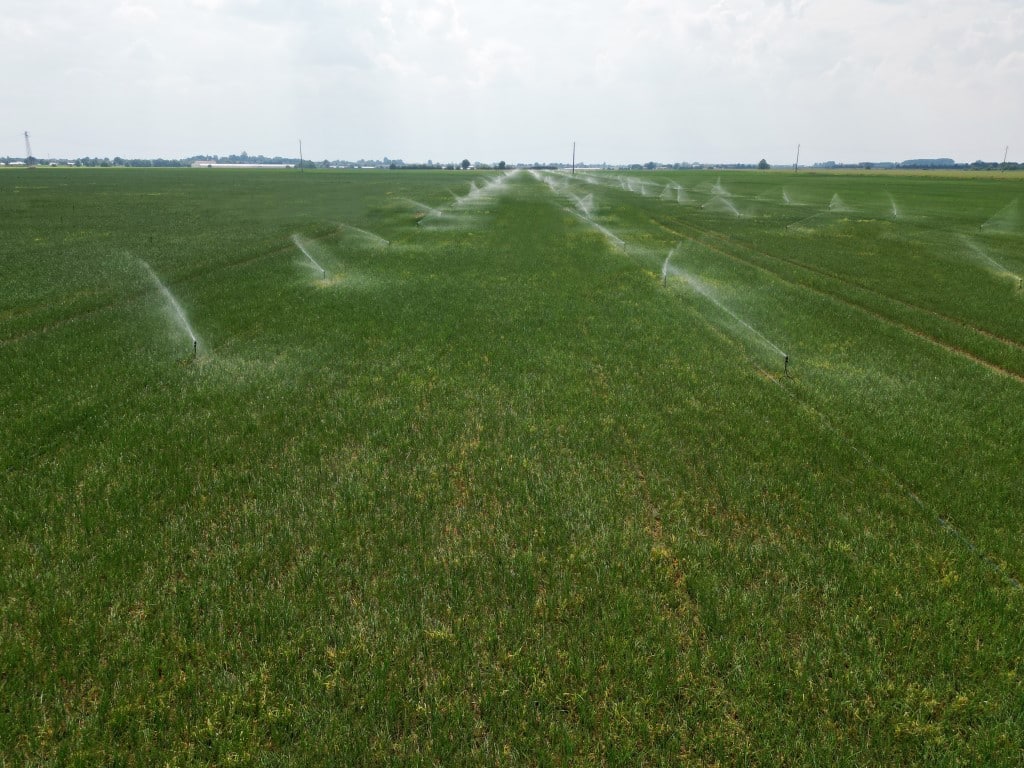
Rivulis offers a comprehensive range of irrigation products including micro-sprinklers, sprinklers, jets, misters and foggers. Each has been designed to meet the requirements of different crops, environments and irrigation needs.
In this section you will discover our most popular micro-sprinklers trusted for a wide range of applications including their key features and ideal applications to help you choose the right option for your needs.
While this overview focuses on key models, Rivulis offers one of the most extensive micro-sprinkler portfolios in the industry. Explore here our full range of products.
Micro Sprinklers:
AquaMaster 2005
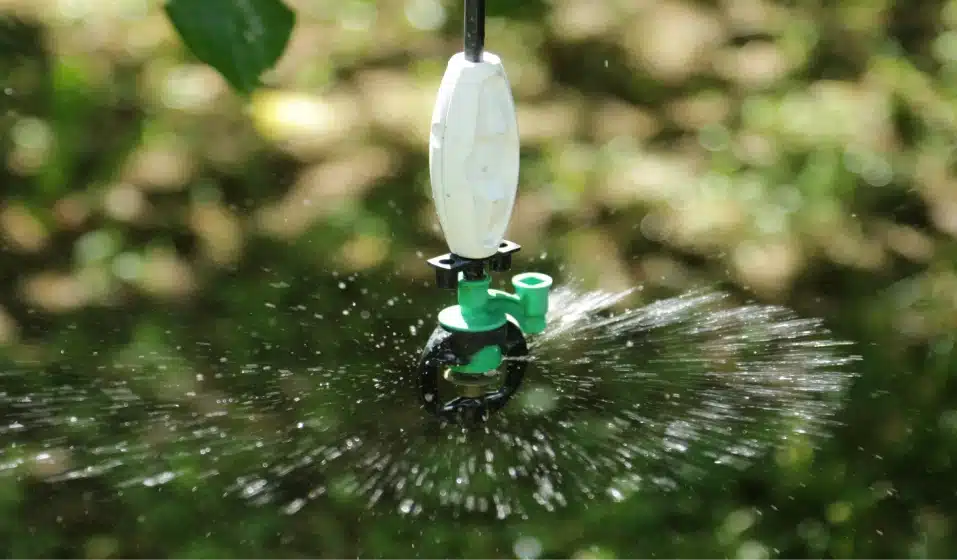
Versatile micro-sprinkler for multiple irrigation applications.
The AquaMaster 2005 delivers precise coverage for orchards, net-houses, and greenhouses; from under-tree to overhead and inverted setups. This micro-sprinkler has been designed to reduce clogging and adapt to tree growth with adjustable spray diameter.
Key Features
Key Features
Description
Applications
Under-tree, overhead, and inverted irrigation
Ideal for
Orchards, net-houses, greenhouses
Nozzle
Insect proof to prevent clogging
Swivel
Two stages with adjustable diameter
Spray Control
Cut diameter limiter to adjust coverage
Versions
Upright and Inverted (green swivel available)
Connection Types
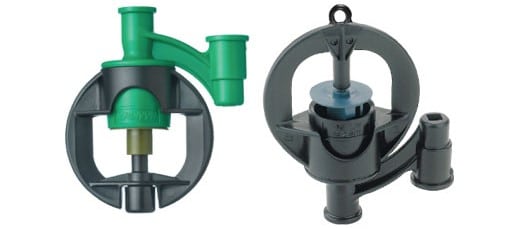
Connector
Use Case
Conic Female
Most common, requires Butterfly base
3/8″ & 1/2″ Threaded
Alternative threaded options
5 mm Quick-threaded
For fast installation
Installation Setups
Upright
Inverted
Micro stand + Butterfly + 60 cm 4/7 tube + spike
Suspended stand + Fast-and-fast connectors
Aquamaster 2002
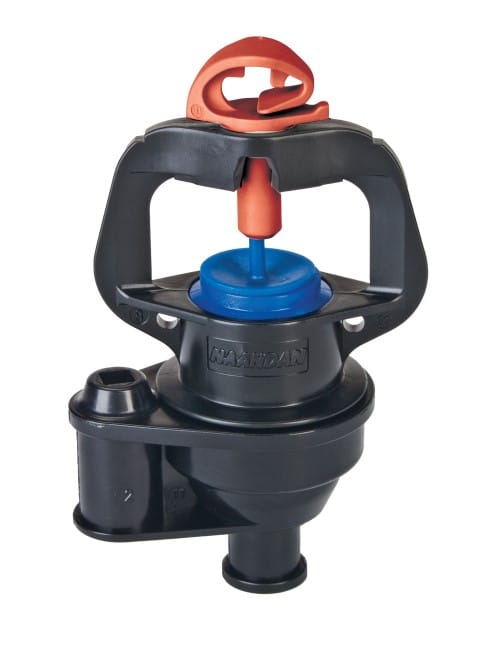
Reliable irrigation with adaptive coverage.
The AquaSmart 2002 delivers uniform irrigation and fertigation in orchards, even on slopes or long laterals. This flow-regulating micro-sprinkler maintains a steady output across pressure changes and adapts to tree growth with a two-stage wetted diameter.
Key Features
Key Features
Description
Flow Regulation
Constant output between 1.5 – 4.0 bar (22 – 58 psi)
Nozzle
Insect-proof and clog-resistant
Spray Control
Two stages with adjustable diameter
Operation
Upright and inverted (green swivel included)
Design
Durable, easy to clean, built for long-term use
Swivel Options
Swivel Color
Wetted Radius
Orange
Smallest
Black
Medium
Blue
Largest
Green
Inverted position
Connection Types
Connector
Use Case
4/7 Barbed
Most common
Conic Female
Alternative option
3/8’’ Threaded
Secure threaded connection
Bayonet
Snap-on attachment
5 mm Quick-threaded
Fast installation
Installation Setups


Upright
Inverted*
Micro stand + 4/7 connector + 60 cm spike
Suspended stand
*In inverted installations, the AquaSmart 2002 produces a bell-shaped spray pattern. Use the Hydraulic Tool for precise positioning during setup.
Green Spin & Super Green Spin Micro-Sprinklers
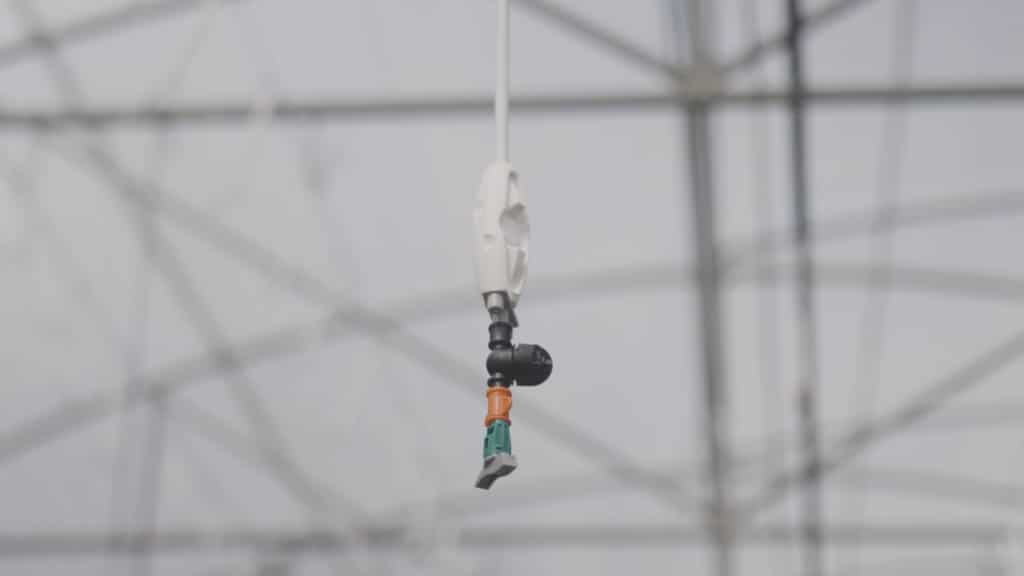
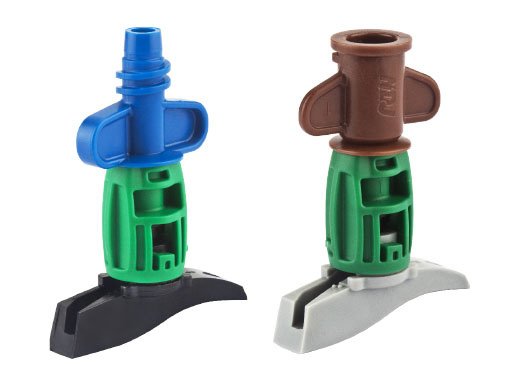
The Green Spin and Super Green Spin provide uniform water distribution with a non-drip, bridgeless design. Ideal for high-tech greenhouse systems, they deliver consistent coverage, improved efficiency, and low maintenance, even in sandy conditions.
Key Features
Feature
Description
Design
Bridgeless, non-drip to prevent dripping during operation
Uniformity
High distribution uniformity (CU > 92%, up to 99%)
Swivel
Low-trajectory for even coverage across crops
Compatibility
Works with PE and PVC pipes
Connections
Female conic tapered or bayonet
System Protection
Requires LPD (Leakage Prevention Device) to prevent post-irrigation drainage
Model Comparison
Model
Flow Rate
Durability
Use Case
Green Spin
43 – 120 l/h (11 – 32 GPH)
Standard
Efficient coverage in typical greenhouse conditions
Super Green Spin
43 – 200 l/h (11 – 53 GPH)
Enhanced for sand resistance and high flow
Best for high-consumption systems or abrasive conditions
Performance & Operation
Specification
Details
Recommended Pressure
2.0 – 3.0 bar (29 – 44 psi)
Uniformity Coefficient
Over 92%, up to 99%
Ideal Environment
High-tech greenhouse irrigation
LPD Function
Prevents water drainage after shut-off and ensures fast system reactivation
Flipper
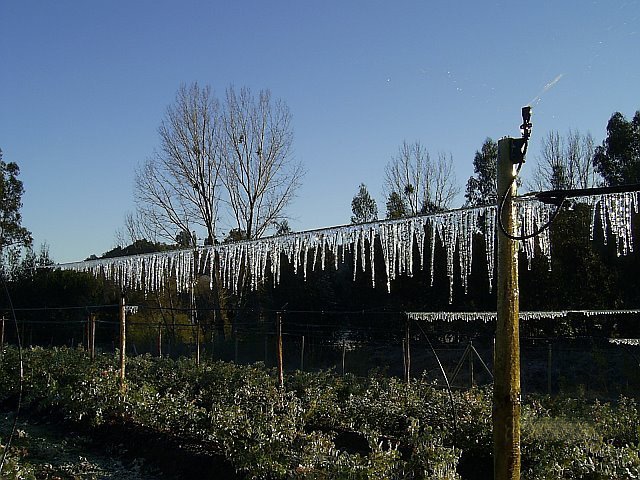
Targeted frost protection with high water efficiency.
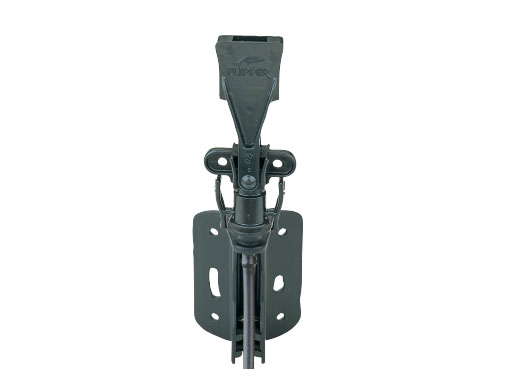
The Flipper Micro-Sprinkler delivers efficient frost defense in vineyards and orchards by applying water in a narrow, 50–70cm strip, cutting water use by up to 70% versus conventional overhead sprinklers.
Key Features
Feature
Description
Narrow spray band
Direct row application reduces water waste
Large droplets on startup
Slower cooling, lower pumping & installation cost
Dry paths between rows
Allows vehicle/work access during frost events
Operating Parameters & Flow Rates
Parameter
Value
Pressure
2.0 – 3.0 bar (29 – 44 psi)
Flow rate
25 – 45 l/h (7 – 12 GPH)
Optional Regulators
Available to fine‑tune flow
Spacing & Nozzle Options
Nozzle Color / Flow
Max Spacing
Black (25 l/h)
6.0 m (19.7 ft)
Violet (35 l/h)
7.0 m (23.0 ft)
Brown (43 l/h)
9.0 m (29.5 ft)
Jets:
Smart Jet
Flexible sprinkler solutions for all terrains.
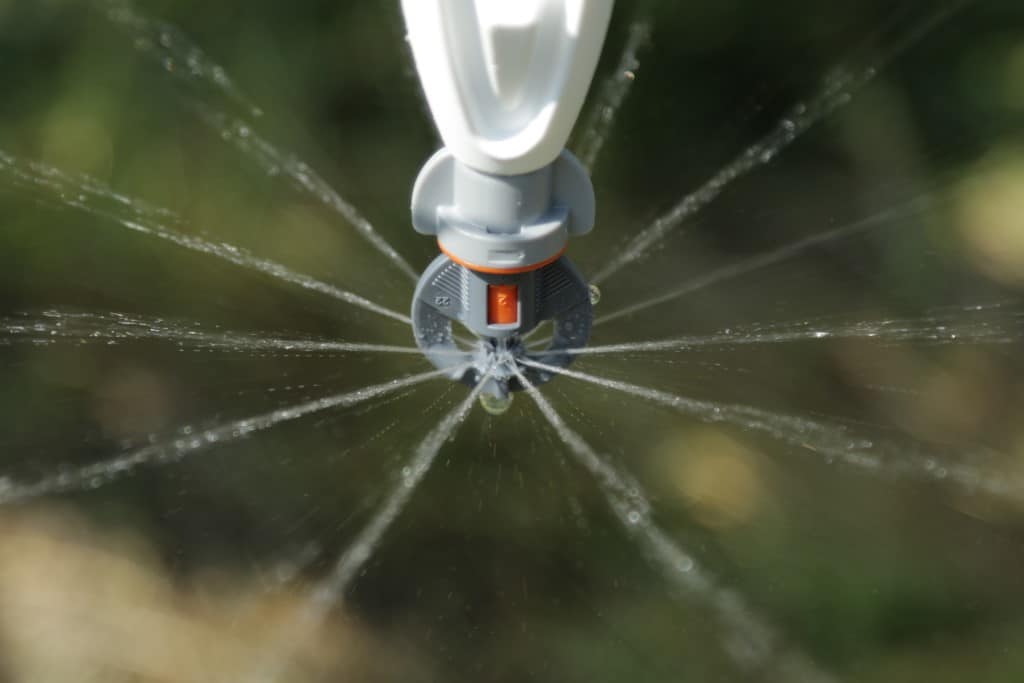
The Smart Jet family adapts to site challenges; from insect-heavy areas to sloped terrain, with modular options for protection and pressure compensation.
Configurations
Smart Jet
Standard version
Smart Jet PC
Pressure Compensating
Smart Jet Inverted / PC Inverted
For overhead/inverted setups
Performance Specs
Feature
Value / Description
Flow Rate Range
15 – 136 l/h (4 – 36 GPH)
Operating Pressure
0.7 – 3.0 bar (10 – 44 psi)
Distribution
Multiple spray patterns, variable diameters
Terrain Adaptability
PC models stabilize flow on uneven lines
Misters
Green Mist Misters
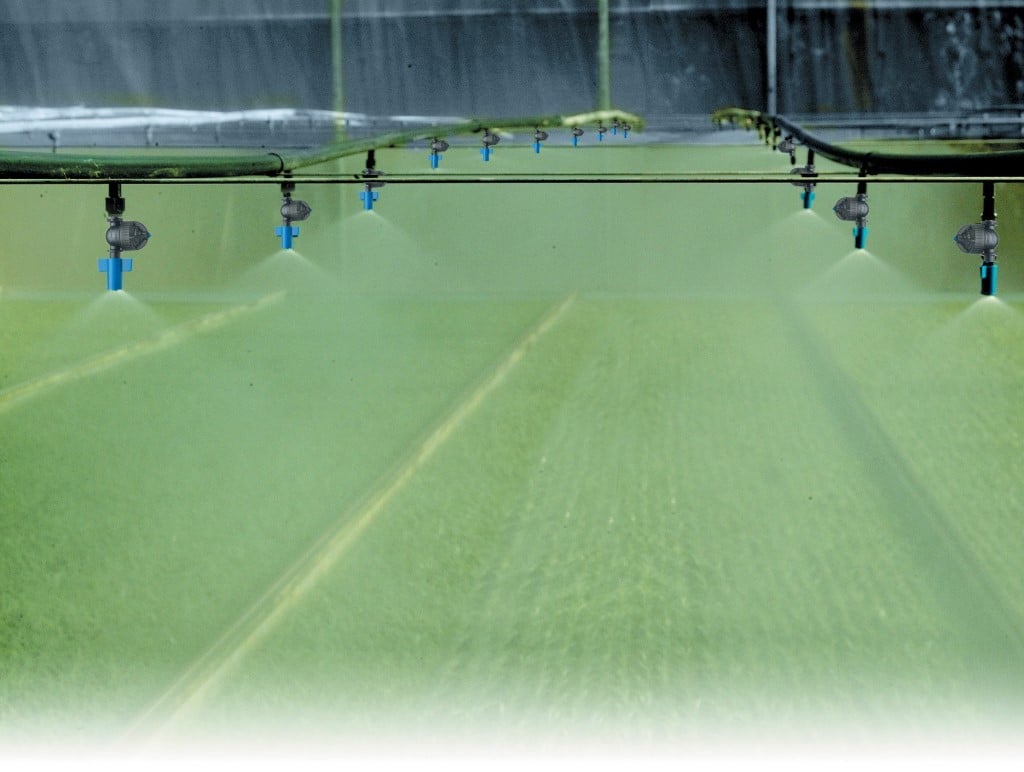
Gentle and precise irrigation for nursery propagation.
The Green Mist creates a fine, controlled mist ideal for seedling environments while minimizing drift and maximizing uniformity.
Operating Parameters
Parameter
Value
Pressure
2.0 – 3.5 bar (29 – 51 psi)
Flow Rate
30 – 40 l/h (8 – 11 GPH)
Wetted Diameter
~1.2 m (3.9 ft)
Installation Guidelines
- Install at 1.0 to 1.2 m above benches
- Use suspended stands (30 cm or 60 cm)
- Max spacing between misters: ~0.8 m (2.6 ft)
- Use LPD (leakage prevention device) for pulsed irrigation and drip control
Foggers
Super Fogger Micro-Sprinkler
Mist, cool, and coat, all in one device.
The Super Fogger is a multi-outlet micro-sprinkler designed for cooling, humidification, and chemical application. Its Leakage Prevention Device (LPD) feature for pulse operation enables minimal leaf wetting perfect for avoiding excess moisture on plants.
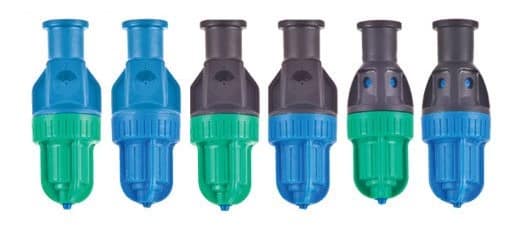
Specifications
|
Droplet size |
55 µm (2.2 mils) |
|
Spacing (m) |
1 outlet: 1.5 × 3.0 meters |
|
2 outlets: 2.0 × 4.0 meters |
|
|
4 outlets: 3.0 × 3.0 meters |
The Super Fogger is easy to install and works with both PE pipes and 3/8″ threaded PVC pipes
Operating Parameters
Number of Outlets/ Pressure Options
Medium Pressure – Green Cover (3 bar)
High Pressure – Blue Cover (4 bar)
1 outlet
5.6 l/h
6.5 l/h
2 outlets
11.2 l/h
13 l/h
4 outlets
20.8 l/h
24 l/h
Super LPD
No drainage. Fast restart. The Super LPD ensures irrigation starts fast and clean by preventing unwanted drainage. Compatible with all Rivulis micro-sprinklers, misters, and foggers.
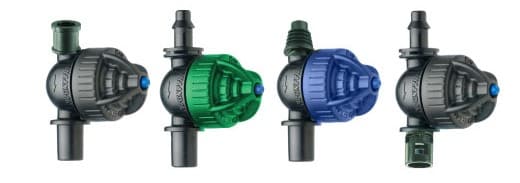
Models and Specifications
Model
Open Pressure
Close Pressure
Color / Use
Low-Pressure (Black)
1.4 bar (20 psi)
0.6 bar (9 psi)
For low-pressure systems
Medium-Pressure (Green)
3.0 bar (44 psi)
1.5 bar (22 psi)
Mid-range applications
High-Pressure (Blue)
4.0 bar (58 psi)
2.4 bar (35 psi)
High-pressure setups
The Right Connection Makes All the Difference
From sprinkler heads to accessories, choosing the correct connector ensures your Rivulis system runs smoothly, efficiently, and without leaks. Here’s how each connection type works and which one fits your setup best.
Types & Usage
Connection Type
Used By / Compatibility
Notes & Accessories
Female Conic
AquaMaster 2005, Green Spin, Modular
Use with Butterfly Base or LPD Female-4/7
4/7 Barbed
AquaSmart 2002, Super Fogger
No base needed; use micro tube or spike
Bayonet
Green Spin, Hadar 7110, AquaSmart 2002, SmartJet PC, Super Fogger, SuperLPD
Needs bayonet adapter; LPD Bayonet options
Quick-Thread
Smart Jet
Attaches directly to micro tube; spike or weight for inverted
Sprinklers
Mamkad 16 Sprinkler
Versatile, durable, and precise.
The Mamkad 16 handles vegetation, floral, nursery, and orchard irrigation with a robust design. High uniformity, clog resistance, and flexible configurations make it a go-to for mixed cropping systems.
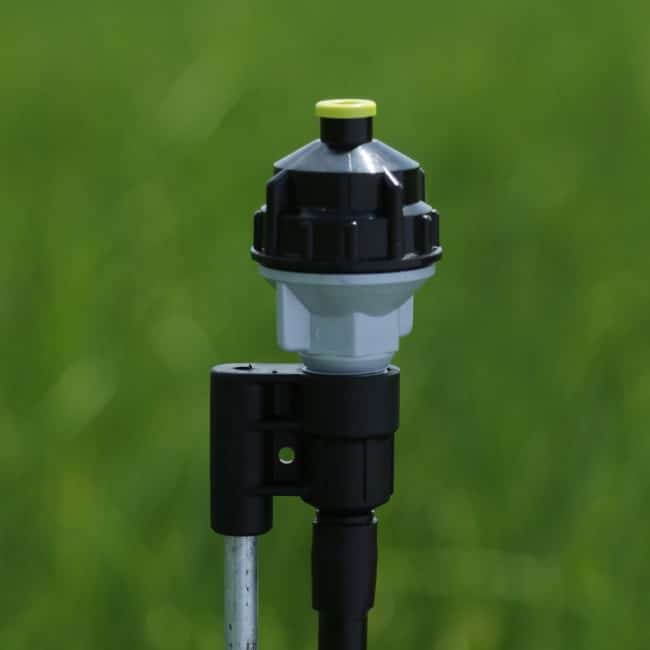
Key Features
Feature
Benefit / Description
Closed ball mechanism
Longevity and smoother operation
Strong plastic + ceramic washers
Combat wear and tear
Insect-resistant nozzle
Fewer clogs, less maintenance
Uniformity
CU > 92%
Flow Rates
135 – 383 l/h
Models
Model Type
Pressure / Use
Use
Standard
2.0–4.0 bar (29–58 psi)
Open Field or above-tree use
Low-Angle
2.0–4.0 bar (29–58 psi)
Orchards (with a stream heigh of 60–65 cm)
Flow-Regulated
2.5–5.0 bar (36–73 psi)
On uneven terrain to obtain consistent flow
Road Protector accessories are available.
Specifications:
- Spacing: 6 to 9 m (adjust for wind).
Key Features
Feature
Details
Sealed silicone chamber
Prevents wear, extends life
Constant rotation
Maintains uniformity even at large spacings
Models
Standard, Low-angle (14°)
Specifications
Flow Rates
310 – 730 l/h (based on nozzle & pressure)
Operating Pressure
1.5 – 3.5 bar (22 – 51 psi)
Spacing
9×9 to 14×14 m (adjust for wind)
Uniformity
CU > 92%
Compatible Stands
Irristand 52/53 and Elite systems
Super 10 Sprinkler
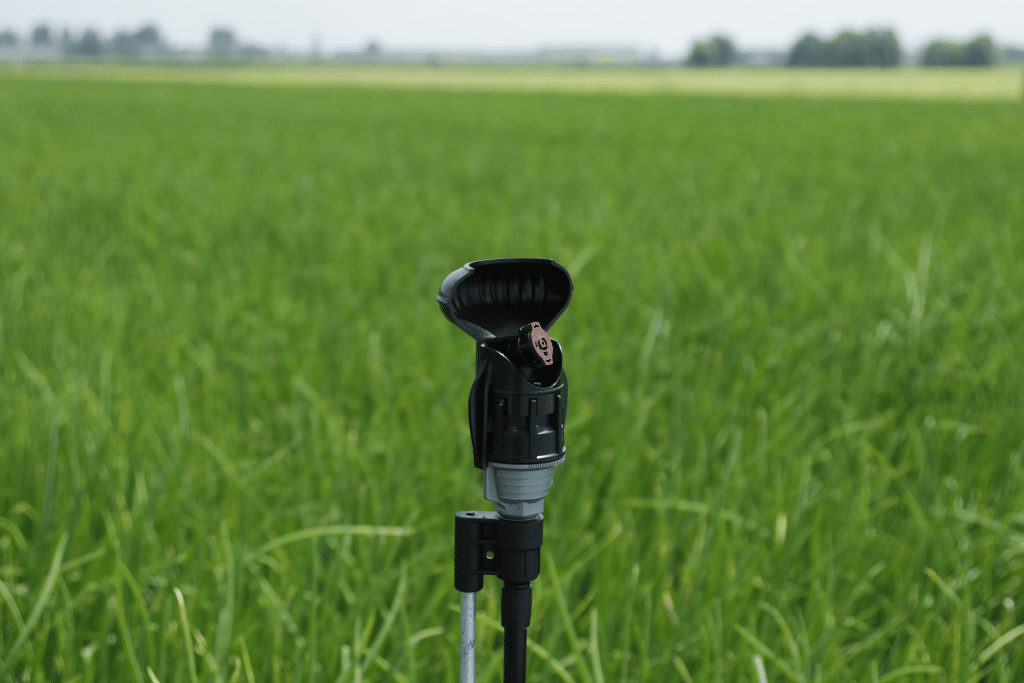
Uniform watering, simplified maintenance.
With durable materials and easy-clean bayonet nozzles, the Super 10 Sprinkler supports reliable performance across vegetables, flowers, and nursery crops.
Specifications & Options
Model / Feature
Details
Flow Rates
320 – 850 l/h
Operating pressure
2.5 – 4.0 bar standard; 3.0 – 5.0 bar for flow-regulated
Spacing
9×9 to 12×12 m (adjustable for conditions)
Uniformity
CU > 92%
Ideal for
Vegetables, germination, frost protection, orchard irrigation
Accessories
Works with Irristand 52 systems
5022 SD Sprinkler
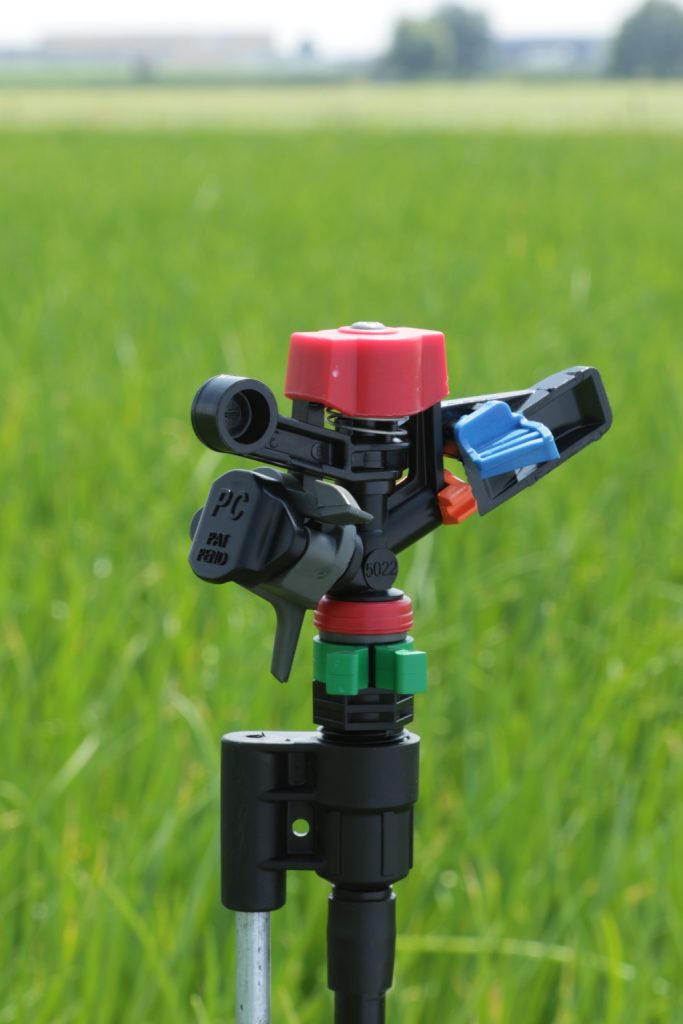
Strong, flexible impact sprinkler.
Weather-resistant and clog-resistant, the 5022 SD offers multiple configurations and reliable performance across diverse field and nursery applications.
Key Features
Feature
Details
Hammer + Super Diffuser Plate
Uniform distribution with one or two nozzles
Durable plastics
Resistant to corrosion, chemicals, UV
Anti-clog design
Better field reliability
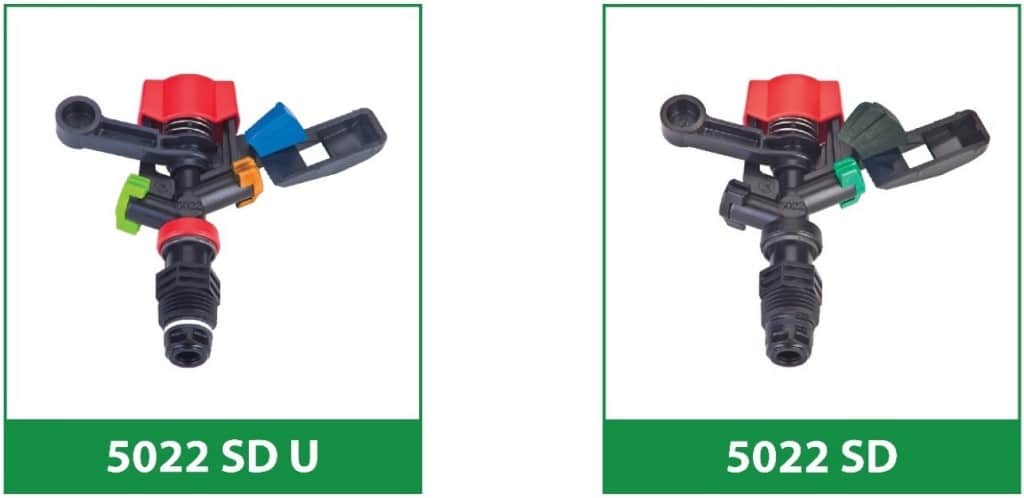
Models
Model
Nozzle Range / Use
5022 SD U
Works with 2.5–2.8 mm nozzles
5022 SD
Works with 3.0–4.0 mm nozzles
Specifications:
Operating Pressure
1.5 – 4.0 bar (22 to 58 psi)
Flow Rates
310 – 1,430 l/h, based on nozzle and pressure
Spacing
9×9 to 12×12 m, adjustable for wind
Uniformity
CU > 92%
Patterns
Full-circle, Part-circle options available
Accesorries/Compatibility
Compatible with Irristand 52, 53, and Elite systems
5035 SD Sprinkler
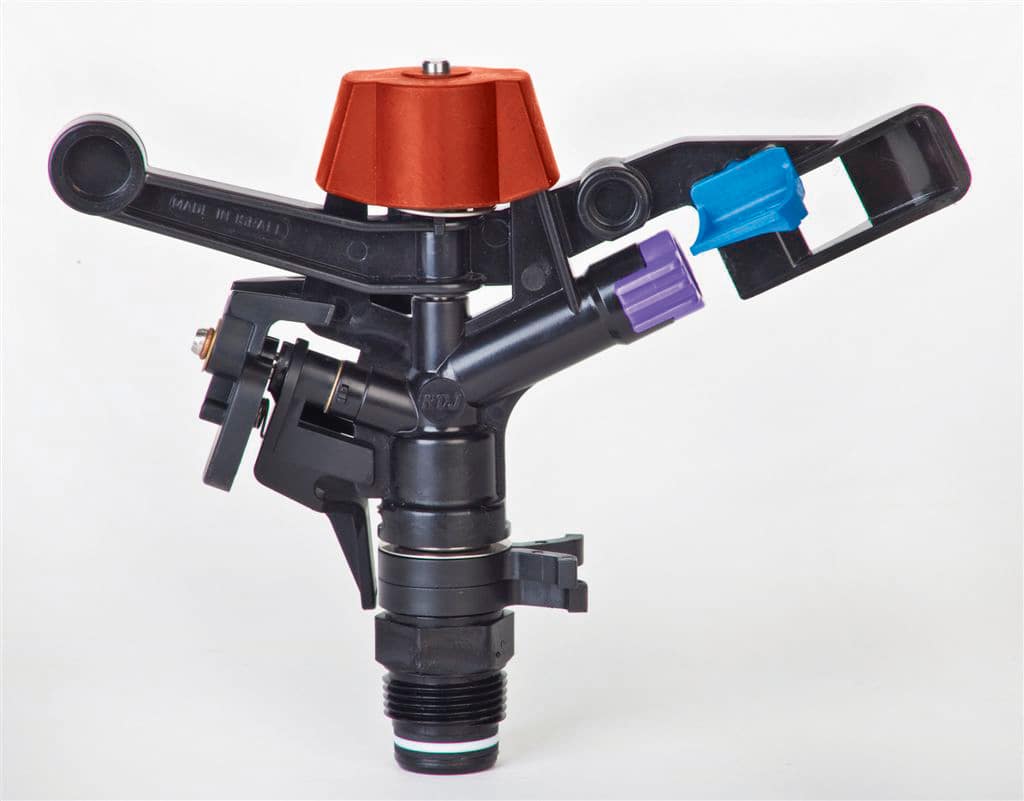
High-capacity impact coverage.
The delivers wide-area, uniform irrigation with strong build quality and adaptable nozzle configurations.
Key Features
Feature
Description
Hammer + SD Plate
Even water distribution under pressure with single or dual nozzles
Durable build
Chemical, UV, corrosion resistant
Stream-straightening vane
Helps coverage in windy conditions
Color-coded nozzles
Ease of maintenance
Models
Model
Nozzle Range
Red Sleeve
3.5-4 mm nozzles
Black Sleeve
4.5-6 mm nozzles
Specifications & Operation
Operating Pressure
3.0 – 5.0 bar (44 – 73 psi)
Flow Rates
720 – 4,600 l/h (depending on configuration)
Spacing
12×12 to 22×22 m
Uniformity
CU > 92%
Applications
Field solid-set systems, wide coverage (5035G model) and windy areas
Rivulis Stands, Riser Systems & Accessories
The Rivulis IrriStand Solid-Set System is your go-to solution for efficient field crop irrigation built for flexibility, durability, and ease of use. Designed for fast setup and breakdown, it makes transporting and assembling PE tubes or PVC lay flats effortless, helping you save time and boost productivity across every season.
Stand Model
For Sprinkler Types/Tubing
Note
Image
Stand 50
Smaller sprinklers (501-U). Male base
Male base, uses 8 mm PE tubes

Stand 52
Larger sprinklers (Super 10, 5022 SD)
Uses 12mm PE or 13 mm PVC

Stand 53
Regulated base for flow‑controlled sprinklers
Silver base, converts standard sprinkler to a flow‑regulated model

Elite Stand
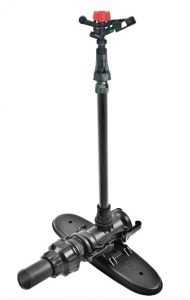
Engineered for power and performance, the Elite Stand provides a heavy-duty, ultra-stable base for large sprinkler systems. Its robust design ensures long-term stability, while offering flexible accessory compatibility; the ideal choice for demanding field conditions.
Compatibility
50 mm PE pipes
Support
¾” PVC risers of 60 cm or 70 cm
Features
V-ring for leak prevention
Custom Accessories
Hooks, stabilizers and PVC risers (in 60 cm or 70 cm llenghts)
Leakage Prevention Devices (LPDs)
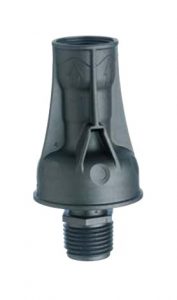
LPDs are essential for ensuring efficient irrigation and are compatible with Stand 52, 53, and Elite. They prevent drainage during system start-up and shutdown, ensuring uniform irrigation.